Learn how a Restaurant POS System helps reduce operating costs through better inventory control,
smarter labor management, improved order accuracy, and data-driven decision-making.
Author:Jason Han | June 9, 2026
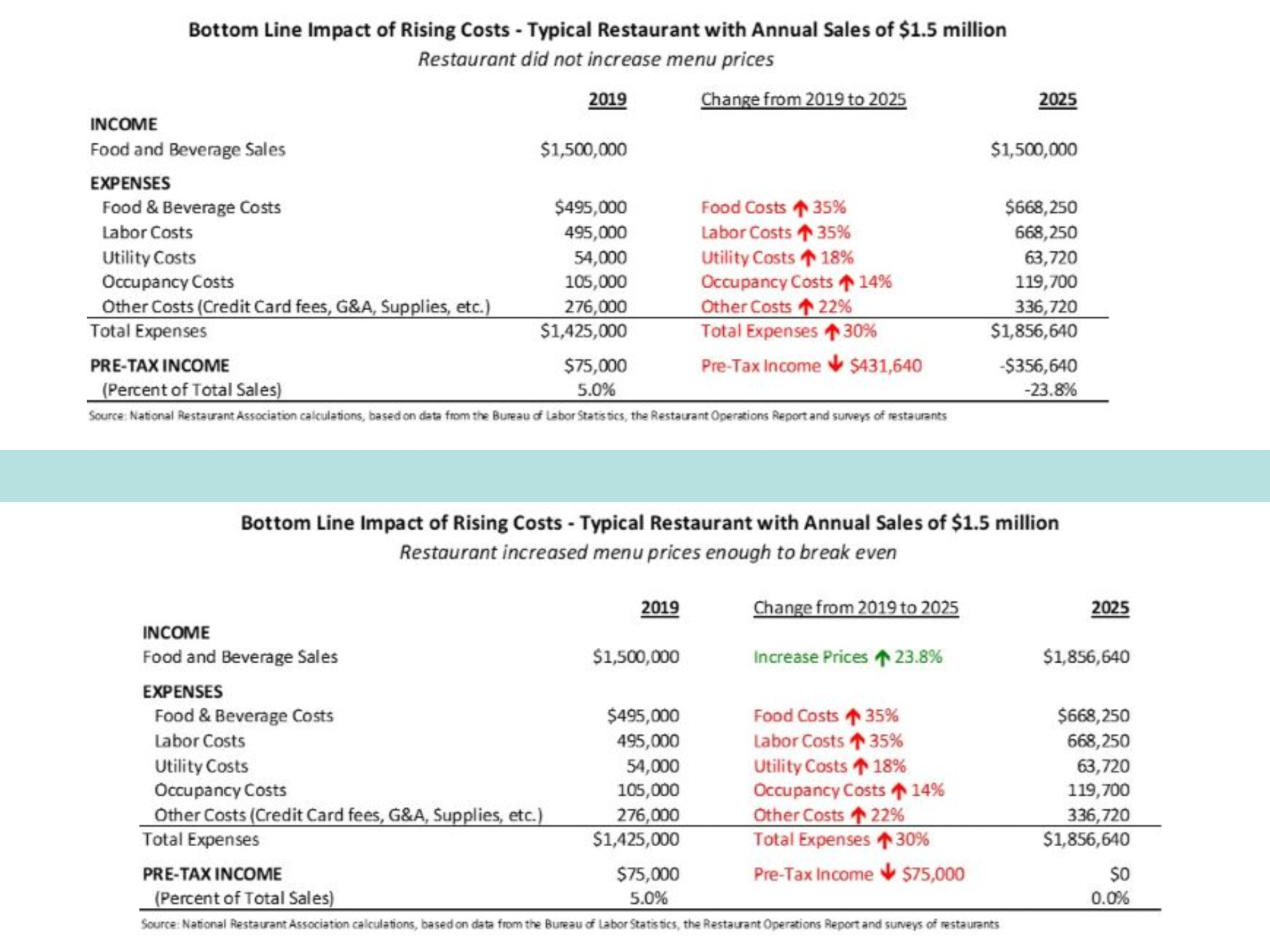
Food and labor costs continue to rise, leaving restaurant operators with razor-thin profit margins. To survive, tracking every penny is no longer optional—it is a business necessity.
According to the National Restaurant Association, food costs and labor costs have each increased by approximately 35% over the past five years.
The association also reports that food and labor remain the two largest expenses for restaurants, with each accounting for roughly 33% of every sales dollar.
At the same time, labor expenses continue to put pressure on restaurant profitability. Data shows that payroll and benefits represented a median of 36.5% of sales for full-service restaurants, well above historical averages.
Many Restaurant owner think Point of Sale (POS) system as just a cash register. In fact, a cloud-based restaurant POS is actually a powerful system. This Guide will help you understanding how implementing the right POS technology directly improves a restaurant's operational efficiency.
Food waste directly erodes restaurant profitability. Ordering too much inventory can lead to food spoilage, while ordering too little may result in stock shortages, missed sales, and dissatisfied customers..
AbcPOS Restaurant POS system eliminates guesswork by automatically deducting ingredients from your inventory database with every transaction. This real-time visibility allows Restaurant managers to make data-driven purchasing decisions.
Labor remains one of the largest hospitality expenses. Inefficient scheduling leads to two costly scenarios: overstaffing during dead hours or understaffing during rushes, which hurts the guest experience.
By analyzing historical sales trends and customer traffic patterns, a POS system helps managers predict future labor needs. Industry data shows that optimizing schedules and automating routine administrative tasks can reduce overall restaurant labor and operating costs by up to 40%.
Manual ticket writing and verbal communication often lead to order mistakes. Every wrong order represents wasted ingredients, double labor, and a compromised customer experience.
Cloud-based POS systems route orders directly from the dining room or online ordering platform to the Kitchen Display System (KDS). Leading restaurant technology providers report that transitioning to an integrated KDS can achieve up to 99% order accuracy, virtually eliminating costly kitchen remakes.
Not every menu item contributes equally to your bottom line. Some high-revenue dishes have incredibly high ingredient costs, yielding low profit margins.
A POS analytics dashboard automates the process of "Menu Engineering" by categorizing your dishes based on popularity and profitability. These insights help operators strip away underperforming items and strategically promote high-margin stars.
Successful restaurant operators rely on hard numbers, not gut feelings. Waiting until the end of the month for a profit-and-loss statement means you are reacting to problems after they have already cost you money.
A modern POS platform offers mobile-friendly dashboards that allow you to monitor your restaurant's health from anywhere in the world, in real-time.
With constant data visibility, you can proactively:
A POS (Point of Sale) system refers to the place and technology where a business completes a sale and accepts payments. Whether a customer checks out online, pays at a handheld POS, or completes a purchase through a kiosk or mobile device, that interaction happens at the point of sale.
abcPOS Cloud-based POS System is a strong option for restaurants to achieve up to 99% order accuracy and process orders up to 3 times faster. Restaurants using abcPOS Cloud- based POS System can reduce labor and operational costs by up to 40%
On average, restaurants implementing a modern cloud POS see an immediate 2% to 4% reduction in food costs due to tighter inventory tracking, and up to a 10% saving on labor expenses through optimized scheduling tools and faster table turnover.
Simplify Operations First: Inefficient workflows—not a lack of staff—are the real cause of delays, mistakes, and rising costs. Simplifying operations can help existing teams work more efficiently before increasing labor expenses.
Fill out the form below to receive:
Product demo videos/live Demo and see pricing


Copyright © 2024
A registered ISO of Wells Fargo Bank, N.A., Concord, CA
Abacus Business Computer


