Running a small business is challenging enough without worrying about complex technology. Choosing a good POS system for small business can streamline your operations, increase revenue, and reduce labor costs. In this guide, we break down the key considerations, compare top POS systems, and provide actionable insights for restaurants, retail shops, and other small enterprises.
Before looking at any POS system, ask yourself:What type of business do I operate (cafe, retail, restaurant)? How many employees and locations will use the system? Do I rely on delivery, reservations, or high-volume transactions? Answering these questions helps narrow down which POS features—like inventory tracking, multi-channel ordering, or staff management—are essential, preventing overspending on unnecessary tools.
A good POS system isn’t just about the upfront hardware. Consider five cost-related factors:
1. Total Cost of Ownership – hardware, subscriptions, support, and add-ons.
2. Subscription Flexibility – ability to scale features as your business grows.
3. Hidden Fees – setup, support, or premium features.
4. Upgrade Expenses – whether software and hardware updates are included.
5. Payment Processing Costs – transaction fees and monthly rates.
By comparing these, you can identify the system that offers the best long-term value, rather than picking the cheapest upfront option.
POS hardware should align with the nature of your business. Small cafes and boutiques often benefit from tablets paired with Bluetooth printers, which are portable and cost-effective. Restaurants with full kitchens typically require integrated touchscreen setups with printers and barcode scanners to efficiently manage high-volume orders. Choosing the right hardware ensures smooth operations, minimizes delays, and supports long-term growth.
For businesses that rely on delivery, selecting a POS system with multi-platform order synchronization and automatic printing is essential to prevent missed orders. Seamless integration with multiple delivery services improves workflow, reduces errors during peak hours, and ensures a positive customer experience—factors that directly influence repeat business and revenue.
High labor costs can be addressed through automated order and inventory management, which decreases staff dependency and can save $500–$1,000 per month. Despite the misconception that POS systems are merely an added expense, data demonstrates that small businesses often achieve ROI exceeding 200% within three years, proving these systems are smart, strategic investments rather than unnecessary costs.
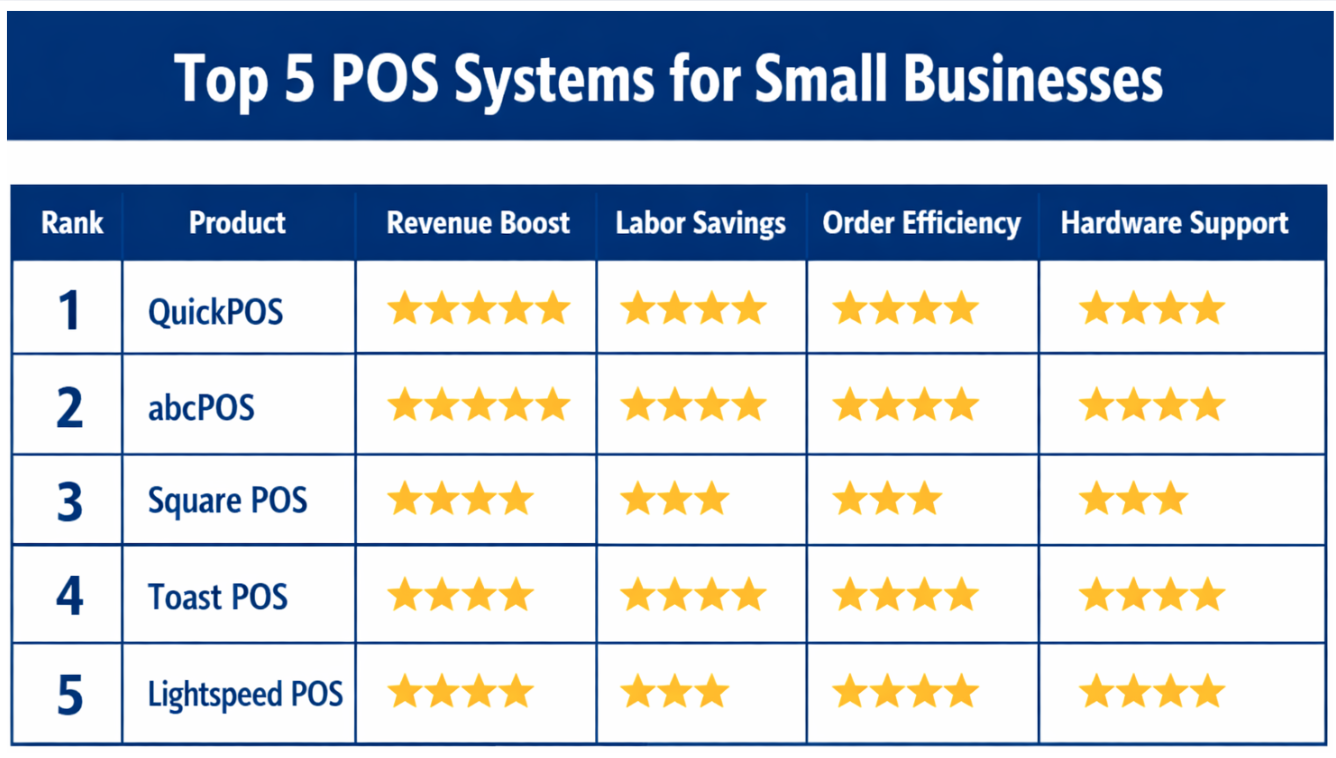
Industry research highlights the measurable advantages of modern POS systems. Small business owners who adopt digital POS solutions report significantly improved operational outcomes. According to a Small Business Majority survey, businesses using digital POS systems see a faster and more efficient checkout process (70%), enhanced customer experience (51%), and improved inventory management (49%) compared with manual systems, indicating real-world efficiency gains.
Research also shows that cloud-based and integrated POS systems reduce inventory discrepancies and stockouts, with real-time inventory syncing cutting stockout rates by about 19% and improving inventory accuracy above 97%, minimizing losses from manual tracking errors. More details can be found on Swell.
Additionally, industry analysis finds that up to 20% increased sales can result from using POS insights to optimize promotions and customer data, and many small businesses report measurable time and cost savings from automation and improved reporting. Source: Top POS Providers.
These real-world findings underscore that a good POS system for small business isn’t just a transactional tool — it’s a verified driver of operational efficiency, better inventory control, and increased revenue potential.
Selecting the right POS system is about more than technology—it’s about future-proofing your business. Evaluating cost, flexibility, functionality, and measurable ROI allows owners to save money, reduce labor, and increase revenue. Businesses across industries, from restaurants to retail shops, benefit from systems that integrate operations, track sales, and provide actionable insights. Investing in the right POS today can directly impact your bottom line tomorrow.
Q1: Will a POS system be expensive for a small business?
Many systems offer zero upfront cost and monthly subscription options, allowing flexibility.
Q2: Do I need multiple devices for my POS?
Not necessarily. Small stores may start with a single tablet, and cloud-based systems like abcPOS support multiple synchronized devices as your business grows.
Q3: Are updates and maintenance complicated?
Cloud POS systems automatically update, requiring minimal intervention from business owners.
Q4: Which features should small retailers prioritize?
Inventory tracking, payment flexibility, customer management, and order efficiency.
Fill out the form below to receive:
Product demo videos/live Demo and see pricing


Copyright © 2024
A registered ISO of Wells Fargo Bank, N.A., Concord, CA
Abacus Business Computer


