If you're planning to choose a POS system for your restaurant but still aren't sure what a POS system actually is or how it can help your business, this article will help you clearly understand why every modern restaurant needs a POS system that truly fits its operation.
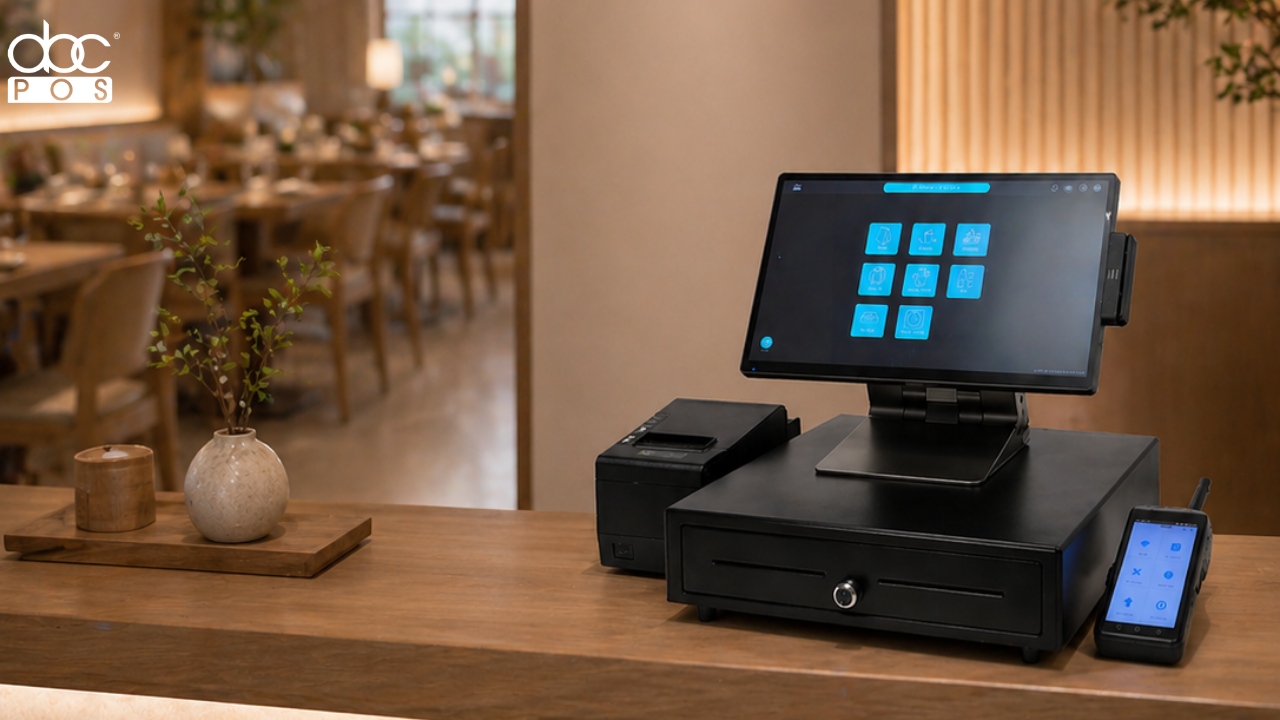
A POS system (Point of Sale system) is an integrated business solution that combines both hardware and software to handle payments, checkout, inventory management, and customer management during transactions.
In the restaurant industry, a POS system is much more than just a cash register. It can manage:
In other words, it can become one of the hardest-working “employees” in your restaurant.
In 2026, restaurant labor costs continue to rise across the United States. As more states increase minimum wage requirements, restaurant owners are facing growing pressure on staffing expenses.
At the same time, labor shortages, high employee turnover, and rising training costs have made operations increasingly difficult for many small and medium-sized restaurants.
For many restaurant owners, hiring challenges are no longer just an inconvenience — they directly affect the restaurant’s ability to operate. Some restaurants have even been forced to shorten business hours, reduce dine-in services, or cut back on delivery operations because of ongoing staffing shortages.
This is exactly why more restaurants are turning to smart POS systems to replace parts of their manual workflow.
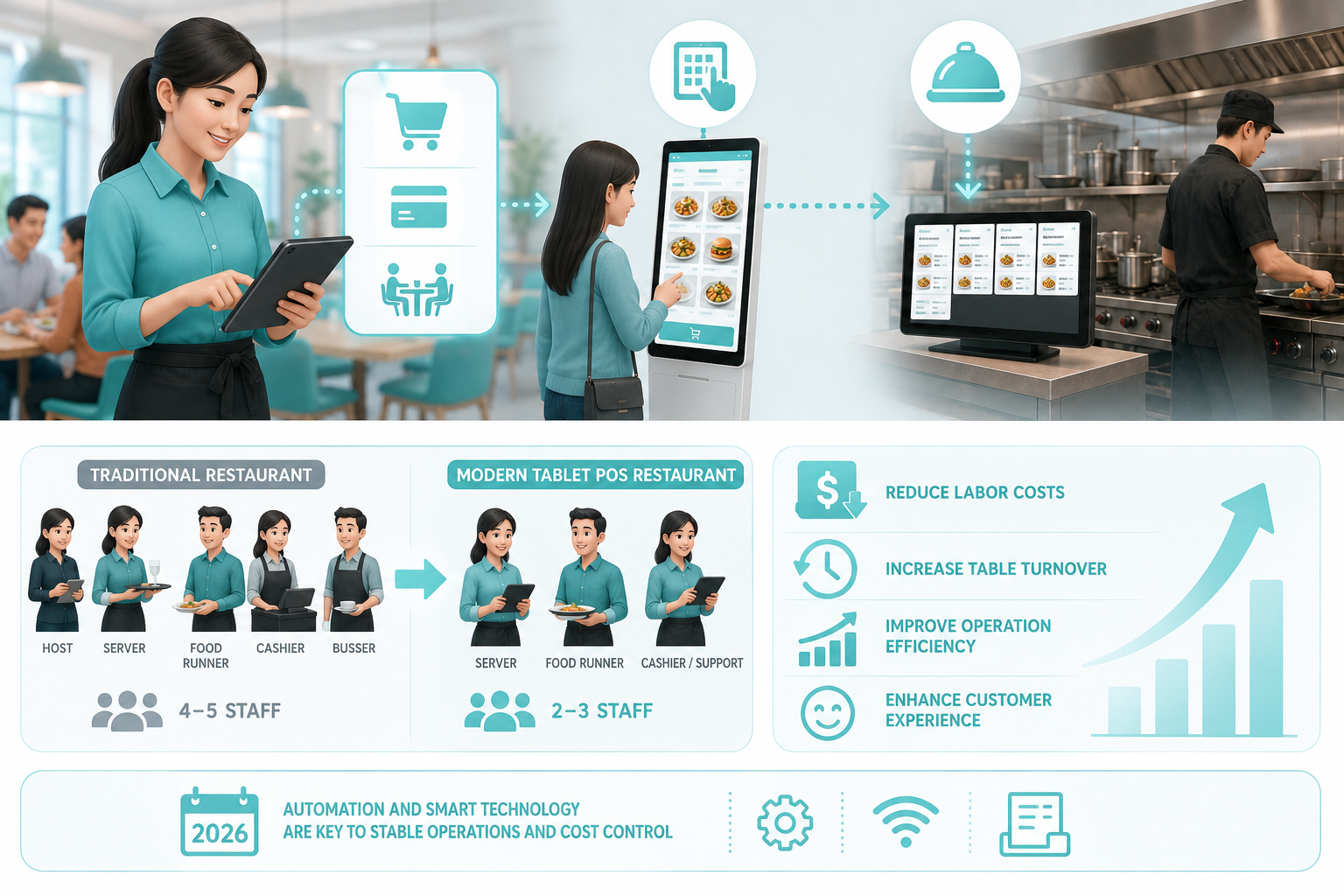
A restaurant POS system can now handle tasks that previously required several employees. For example, tablet-based handheld POS devices allow staff to take orders, process payments, and manage tables all from one device. If self-ordering is enabled, customers can even place their own orders directly from a tablet, with orders automatically sent to the kitchen in real time.
Traditional restaurants often needed 4–5 employees to manage ordering, food running, and cashier operations. With a modern tablet POS system, many restaurants can operate efficiently with just 2–3 staff members focused primarily on service and food delivery.
This is why today’s POS systems are no longer just “cash registers.” They have become essential business tools for reducing labor costs, improving table turnover, and enhancing customer experience.
As labor costs continue to rise in 2026, automation and smart restaurant technology are quickly becoming key strategies for maintaining stable operations and controlling expenses.
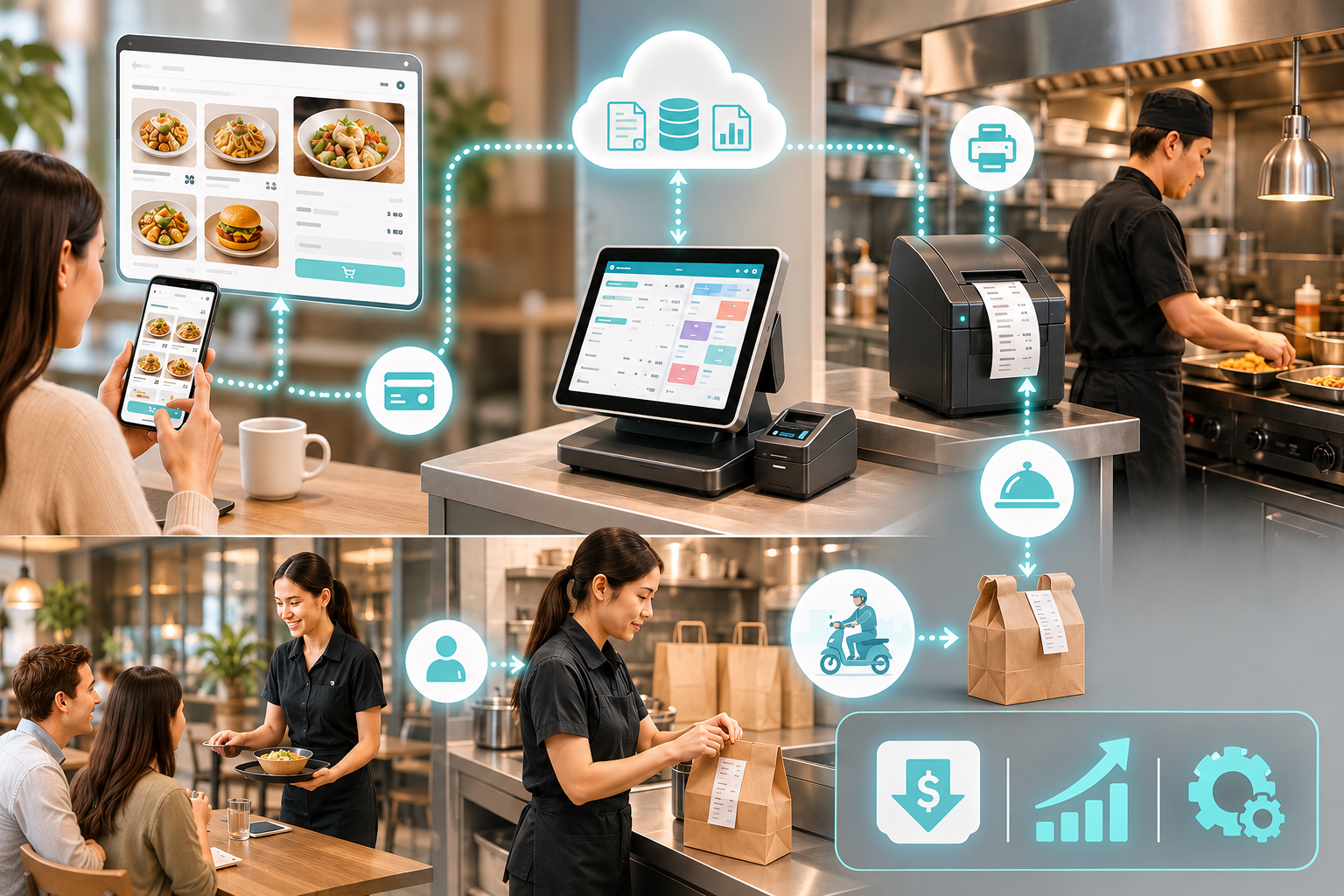
Online ordering features built into modern POS systems can instantly create an entirely new sales channel for restaurants.
In 2026, delivery and pickup orders are no longer just alternatives created during the pandemic — they have become one of the restaurant industry’s primary consumer behaviors.
More customers now prefer ordering online and choosing pickup or delivery because it saves both time and money.
According to the National Restaurant Association, nearly 74% of restaurant orders in the United States between 2025 and 2026 were consumed outside the restaurant through delivery, drive-thru, or pickup services.
For restaurant owners, a POS system with integrated online ordering is essentially like adding a 24/7 digital storefront to the business.
Through an online ordering website provided by the POS company, customers can browse the menu, place orders, and pay online. Every order is then automatically synced to the kitchen printer and sales reporting system.
Employees no longer need to manually check orders, print tickets, or relay information to the kitchen. The system handles the entire process automatically from order placement to kitchen fulfillment.
This not only reduces operational mistakes but also dramatically improves order processing efficiency.
For dine-in restaurants, staff can remain focused on serving guests and preparing takeout orders without constantly switching between online and in-person orders. For ghost kitchens or takeout-only restaurants, some businesses can even eliminate the need for front counter cashiers entirely.
The result is lower labor costs, increased online sales, and a more efficient restaurant operation overall.
For restaurants, long-term success always comes down to two things: attracting customers and bringing them back.
Customer acquisition helps restaurants gain new business, while customer retention is what creates stable, long-term revenue.
Most successful restaurants are not built solely on one-time traffic — they succeed because they have loyal customers who continue coming back.
This is exactly what loyalty systems are designed for.
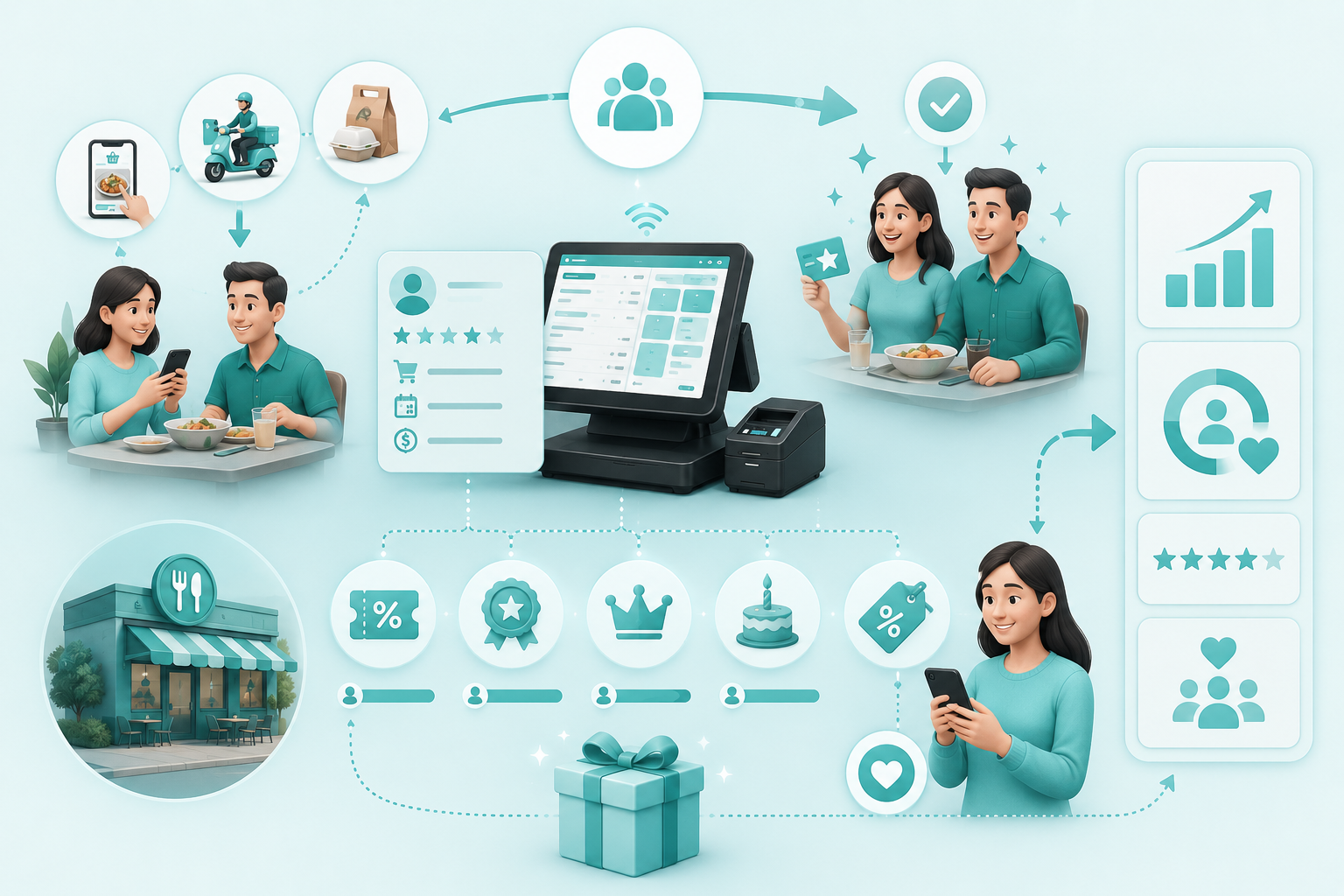
Modern POS systems automatically record customer purchase history and spending behavior. Whether customers dine in, order delivery, or choose pickup, the system tracks their spending, visit frequency, and order history to support future marketing campaigns.
Restaurant owners can easily create customized loyalty programs directly within the POS system. For example:
While these features may seem simple, they are extremely effective at increasing repeat business.
Unlike traditional flyers or one-time discounts, loyalty programs help restaurants build long-term relationships with customers.
As customers accumulate points, rewards, and membership benefits, they become more likely to return to the restaurant again and again. Over time, casual customers gradually turn into loyal repeat customers.
For restaurants, strong customer retention means more stable revenue and healthier cash flow.
Especially in 2026, with rising labor costs and increasing competition, more restaurant owners are realizing that long-term profitability comes not only from selling more but from keeping customers coming back consistently.
One of the most powerful features of a modern POS system is not simply taking orders or processing payments — it’s the ability to automatically organize and analyze important business data.
A smart POS system allows restaurant owners to clearly understand how their business is actually performing.
For example, restaurant owners can instantly view:
These insights help restaurant owners make decisions based on real data rather than assumptions or guesswork.
Even more importantly, modern POS systems often support customized reporting.
Restaurant owners can work directly with their POS provider to create reports that focus on the metrics most important to their business. Some restaurants prioritize delivery growth, while others focus more on customer retention or menu profitability.
The system can automatically generate reports and operational insights tailored to those needs.
This allows restaurant owners to monitor their business in real time and make smarter operational decisions every day.
For example:
In the past, these decisions often required experienced managers to manually analyze business performance over time. Today, POS systems can present these insights automatically through data.
And this is only one feature inside a POS system.
If a restaurant hired an employee to manually organize sales data, analyze menu performance, track customer retention, and prepare business reports every day, the labor cost would likely exceed the cost of the POS system itself.
For modern restaurants, a POS system has become more like a 24/7 business operations assistant — helping owners reduce labor costs, improve management efficiency, and continuously optimize restaurant performance through real-time data.
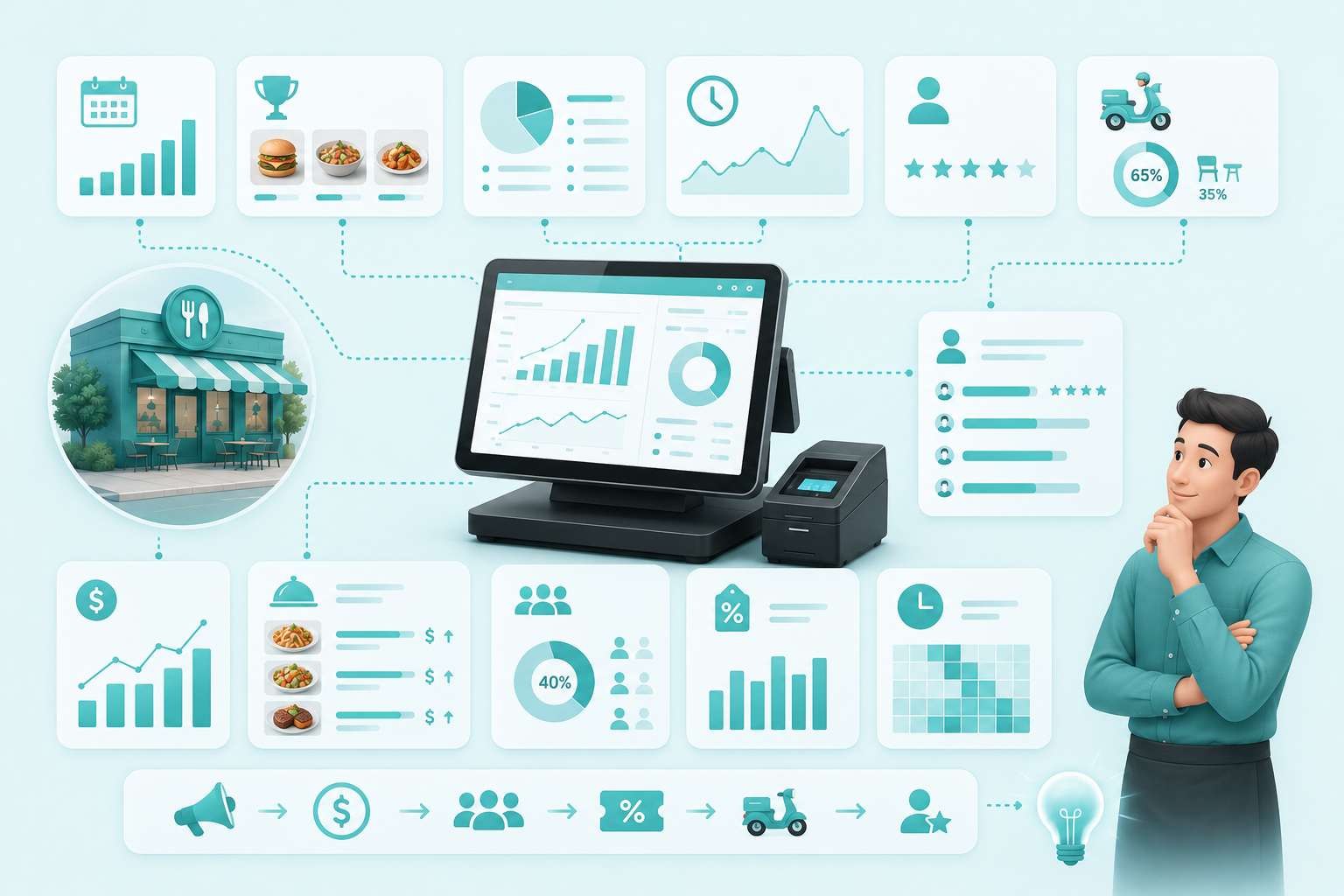
At the end of the day, restaurants do not necessarily need the most complicated POS system with endless features. What restaurants truly need is a POS system that fits their business model. The value of a POS system is not measured by how many features it has, but by whether it actually solves operational problems.
A dine-in restaurant may care most about table management and service efficiency.
A restaurant focused on delivery and pickup may prioritize stable online ordering and kitchen automation.
A multi-location restaurant may focus more heavily on reporting, loyalty management, and centralized operations.
That’s why restaurant owners should pay attention not only to what features a POS system offers, but also whether the POS company can provide customized solutions based on the restaurant’s specific needs.
Every restaurant operates differently.Some restaurants want simpler ordering workflows. Some prioritize loyalty marketing. Some require advanced delivery and kitchen coordination. Others may need customized reports, menu structures, or promotional tools.
A truly professional POS provider does more than simply sell software — they help restaurant owners design the best operational solution for their business. From a long-term perspective, choosing the right POS system is not just purchasing equipment. It is an investment in your restaurant’s operational efficiency, customer experience, competitive advantage, and long-term profitability.
The cost depends on the restaurant’s size and the features needed. Most POS systems include hardware, software, payment processing, and monthly service fees.
Yes. Modern restaurant POS systems can manage dine-in, delivery, pickup, and online orders all in one system.
Not usually. Most modern POS systems are designed to be simple and user-friendly, allowing employees to learn basic operations quickly.
Yes. Many POS companies offer customized features such as loyalty programs, sales reports, menu layouts, online ordering, and workflow settings based on your restaurant’s needs.
Most professional POS companies provide customer support, remote assistance, software updates, and troubleshooting services to help restaurants quickly resolve issues.
Fill out the form below to receive:
Product demo videos/live Demo and see pricing


Copyright © 2024
A registered ISO of Wells Fargo Bank, N.A., Concord, CA
Abacus Business Computer


