If you're searching for POS systems for restaurants in the US, you’re likely comparing more than just pricing — you’re evaluating reliability, integration, and long-term operational impact.
With over 30 years of restaurant operations experience in the US, abcPOS understands what restaurant owners actually struggle with: disconnected orders, rising labor costs, and limited visibility into daily performance.
Choosing the right POS system isn’t about features. It’s about reducing friction in your operation.

Running a restaurant in the U.S. today means managing dine-in service, third-party delivery, direct online ordering, inventory, payroll, and labor compliance — all at once.
According to the 2025 industry report from the National Restaurant Association, off-premise dining remains a major revenue driver nationwide. In markets like New York City, Los Angeles, and Houston, many restaurants generate 40–60% of orders from delivery platforms alone.
When systems are disconnected, staff manually re-enter orders.
Manual processes increase: Order errors, Labor hours, Closing time reconciliation, Stress during peak hours. Rising labor cost pressure has also been documented by the U.S. Bureau of Labor Statistics. A POS system should eliminate these frictions — not create them.
Many systems process payments.
Fewer systems improve operations.
All dine-in, online, and third-party delivery orders should flow into one dashboard.
Without integration, staff switch between tablets — increasing mistakes and slowing service.
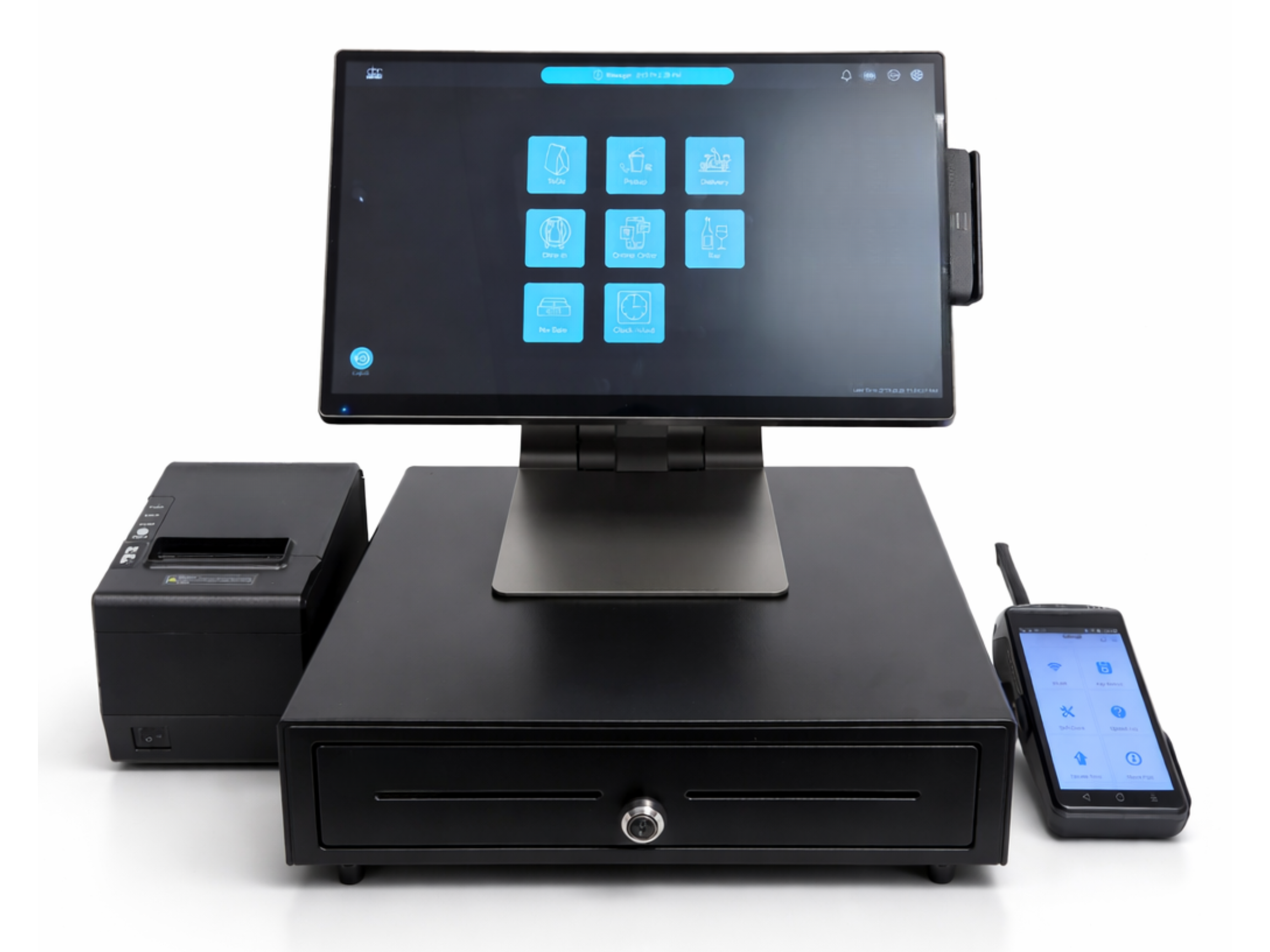
A modern POS system should:
Even saving 30 minutes per shift can translate into thousands of dollars annually.

Restaurant owners shouldn’t wait until month-end to understand performance.
You should know:
Data clarity leads to faster decisions.
If you plan to open a second location, your POS system should scale without requiring a complete replacement.
Migration costs and retraining expenses are often underestimated.
If your POS system helps you:
The annual financial difference can be significant.
The question isn’t subscription price. It’s operational efficiency.
abcPOS is built around real restaurant workflows — not just software engineering.
With 30 years of operational insight in the US restaurant market, the platform was designed to address:
1. Multi-channel order complexity
2. Labor cost pressure
3. Compliance requirements
4. Multi-location growth
This operational-first perspective is what differentiates a transactional tool from a management system.
Before choosing a provider, ask:
Q1: Does it centralize all revenue channels?
Q2: Does it reduce daily manual tasks?
Q3: Does it provide actionable reporting?
Q4: Will it support expansion without disruption?
If the answer is unclear, further evaluation is needed.
In the US restaurant market, margins are tight and labor costs continue to rise.
The right POS system is not a register. It is an operational control center.
Choosing carefully today can directly influence long-term profitability and scalability.
1. Why are delivery platforms so important in 2025?
Because off-premise orders now represent a major share of restaurant revenue, especially in urban markets.
2. What happens when delivery platforms aren’t integrated with POS?
Staff must manually re-enter orders, increasing errors, labor costs, and reconciliation time.
3. How do disconnected systems affect profitability?
They inflate labor hours, slow operations, and reduce margin control.
4. Is direct online ordering still necessary if using third-party apps?
Yes. It protects margins, strengthens brand control, and captures customer data.
5. What should a modern POS system provide?
Centralized order management, real-time inventory sync, automated reporting, and payroll/labor visibility in one system.
Fill out the form below to receive:
Product demo videos/live Demo and see pricing


Copyright © 2024
A registered ISO of Wells Fargo Bank, N.A., Concord, CA
Abacus Business Computer


