The best way to reduce restaurant wait times is to identify where guests are actually waiting: at the door, after being seated, while food is prepared, or when paying the bill. Each delay needs a different solution. Faster seating will not help if the kitchen is backed up, and adding staff at the host stand will not fix unclear table availability.
Start by measuring one busy service, then improve one handoff at a time. The goal is not to rush guests. It is to make the experience more predictable for both guests and staff.
“Long wait time” is not one operating issue. Break it into four stages:
For five busy shifts, record arrival time, quoted wait, seating time, order time, food-ready time, and payment completion. Also note party size, table type, and whether the guest left before being seated.
This creates a clearer answer. If the quoted wait is accurate but food is delayed, improve kitchen flow. If tables are open but guests cannot be seated quickly, improve host communication and table status. If guests wait to pay, review the checkout process.
A wait estimate should reflect your actual tables, party sizes, and turnover patterns—not a number guessed during a rush.
Track how long two-top, four-top, and larger tables are occupied during lunch and dinner. A party of five may wait longer than a party of two even when several tables are available. When a large table can be split or combined, the host should know before promising it to the next party.
A restaurant queue management system helps teams keep walk-ins, reservations, party size, table status, and estimated waits in one view. abcPOS also supports QR waitlist entry and table-ready notifications, so guests do not need to stand at the host stand for repeated updates.
Quote conservatively, then communicate early if a table becomes available sooner. Guests are usually more frustrated by uncertainty than by a clearly explained wait.
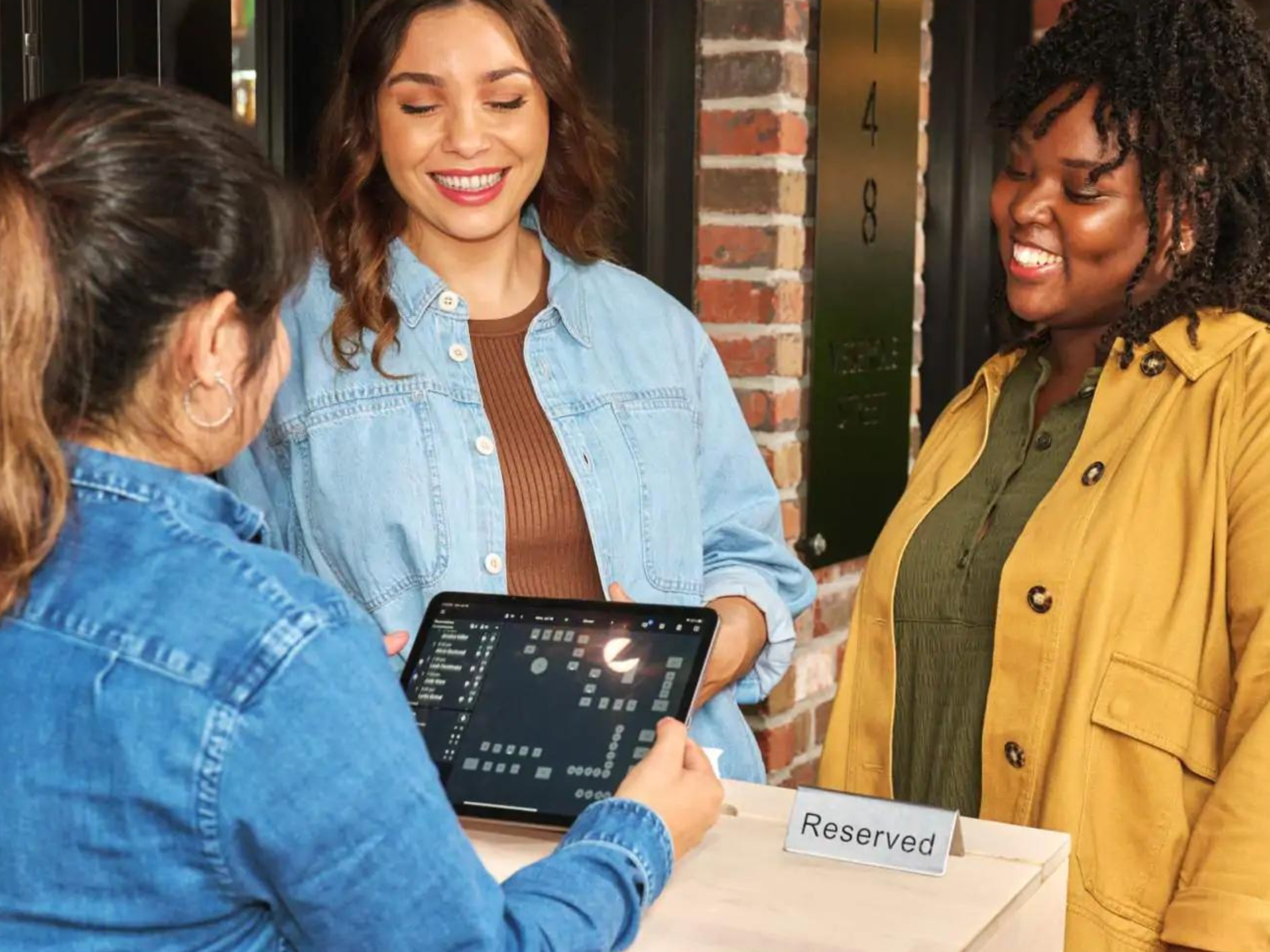
A faster host stand can accidentally create a slower restaurant if too many tables are seated and order at the same time.
During a rush, check whether the kitchen is receiving orders in manageable waves. If five tables are seated at once, the line may be overwhelmed even though the dining room is full. Coordinate hosts, servers, and kitchen staff around the current production capacity.
A connected restaurant POS system can support table management, orders, kitchen communication, and reporting in one workflow. Before changing your process, walk through a real peak-hour scenario: two large parties arrive, several reservations are due, and the kitchen is already handling online orders.
The right decision may be to slow new seating briefly, not to keep promising an unrealistic food time.
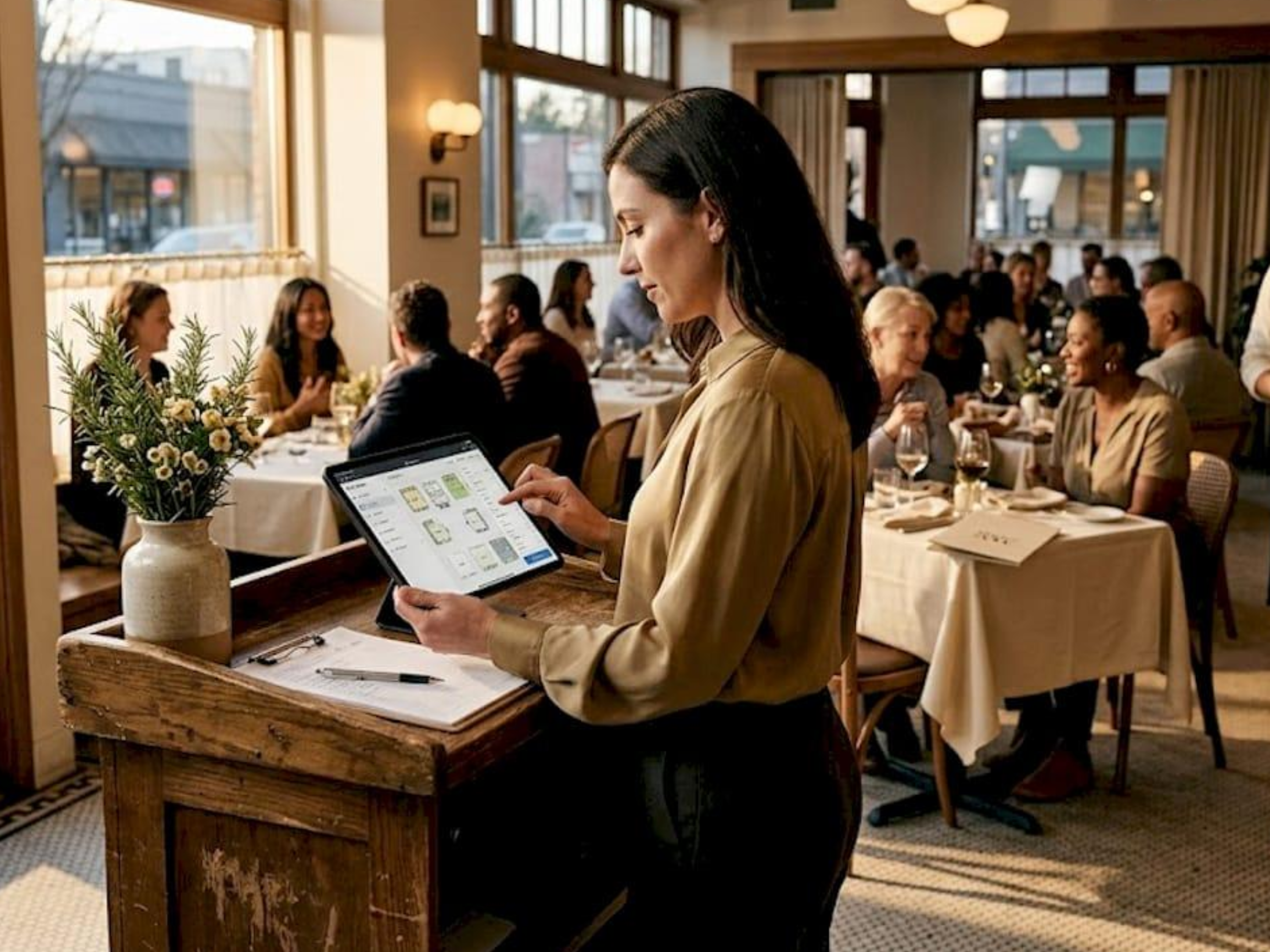
Guests should know three things: that they are checked in, how long the wait is likely to be, and when they need to return.
The National Restaurant Association recommends waitlist tools that allow guests to monitor wait times and receive notifications when tables are ready. A clear update reduces repeated questions at the door and lets the host focus on seating decisions.
Keep the waiting area easy to navigate. When adjusting barriers, counters, or food-service lines, review the official ADA guidance for accessible queues and waiting lines. A smooth guest flow must also remain accessible.
Not every line needs a host or cashier to resolve it.
For quick-service restaurants, cafés, and bubble tea shops, a self-ordering kiosk can give guests another way to begin an order when the counter is busy. For full-service restaurants, table-side payment or QR ordering may reduce repeated trips for simple add-ons or payment requests.
However, do not add ordering capacity if the kitchen is already the bottleneck. First confirm that the preparation team can handle additional orders accurately and on time.
Reducing restaurant wait times does not mean moving guests through the restaurant as quickly as possible. It means giving your team accurate information and giving guests clear expectations.
Start with the handoff that causes the most uncertainty. When waitlist, table status, kitchen pacing, and payment flow work together, restaurants can protect service quality while handling more demand.
Explore abcPOS restaurant solutions to build an operation around the way your restaurant actually serves guests.
Measure where the delay occurs first. The fastest improvement is usually fixing one repeated bottleneck, such as inaccurate wait estimates, unclear table status, or delayed payment.
Not always. A waitlist system improves communication and seating flow, but it cannot create more tables or solve a kitchen backlog on its own.
Use recent seating and turnover data by party size, table type, and daypart. Quote a realistic range and notify guests early if availability changes.
Track guest arrival, quoted wait, seating time, food-ready time, payment completion, party size, table type, walk-aways, and no-shows.
A kiosk can help when the counter is the bottleneck. If the kitchen cannot keep up with current demand, improve kitchen flow before adding another ordering channel.
Fill out the form below to receive:
Product demo videos/live Demo and see pricing


Copyright © 2024
A registered ISO of Wells Fargo Bank, N.A., Concord, CA
Abacus Business Computer


